Tampilkan postingan dengan label Marsupials. Tampilkan semua postingan

Senin, 13 Agustus 2012

Chipmunk


The Biggest Animals Kingdom and in The World | Chipmunk | Chipmunks are omnivorous diet, including cereals, nuts, fruits, berries, bird eggs, small frogs, fungi, worms, insects, and small mammals on occasions, such as young mice. In Wang pockets allow squirrels to more food to help their burrows, for storage or consumption. Western chipmunks only breed once a year. Chipmunks construct expansive burrows greater than 3.5 m long, with a well-hidden entrances. Sleeping quarters are kept extremely clean as shells and feces are stored in the sewer tunnels.


Chipmunks play an important role as prey for various predatory mammals and birds, but are also opportunistic predators themselves, particularly on birds' eggs and nests. In Oregon, mountain bluebirds (Sial currucoides) Mobbing observed energetic squirrels I see trees near their nest. Chipmunks usually live about three years, perceived life nine years in captivity. Squirrels can be treated as a single genus, Tamias, Tamias or three genres, including Eastern Chipmunk, Eutamias, including Siberian squirrel, and Neotamias that 23 other, mostly Western, includes species.


Studies of mitochondrial DNA shows that the difference between the three groups is similar Chipmunk genetic difference between Marmota and Spermophilus. Common name originally was written "chitmunk", the indigenous Odawa (Ottawa) jidmoonh word, meaning "red squirrel" (cf. Ojibwa, ajidamoo) earliest form cited in the Oxford English Dictionary (from 1842) is "chipmonk," but "chipmunk" appears in a number of books in the 1820 and 1830.


In mid 1800, John James Audubon and his sons in a lithograph squirrel in their viviparous quadrupeds of North America called it "Chipping Squirrel [or] Hackee. Chipmunks are also called" striped squirrels "" branches "," squirrels "," tiger wood "or" Gophers ", although the name" ground squirrel "commonly refers to the squirrels, such as those in Spermophilus like.


Find The Biggest Animals Kingdom and in The World

Jumat, 20 Juli 2012

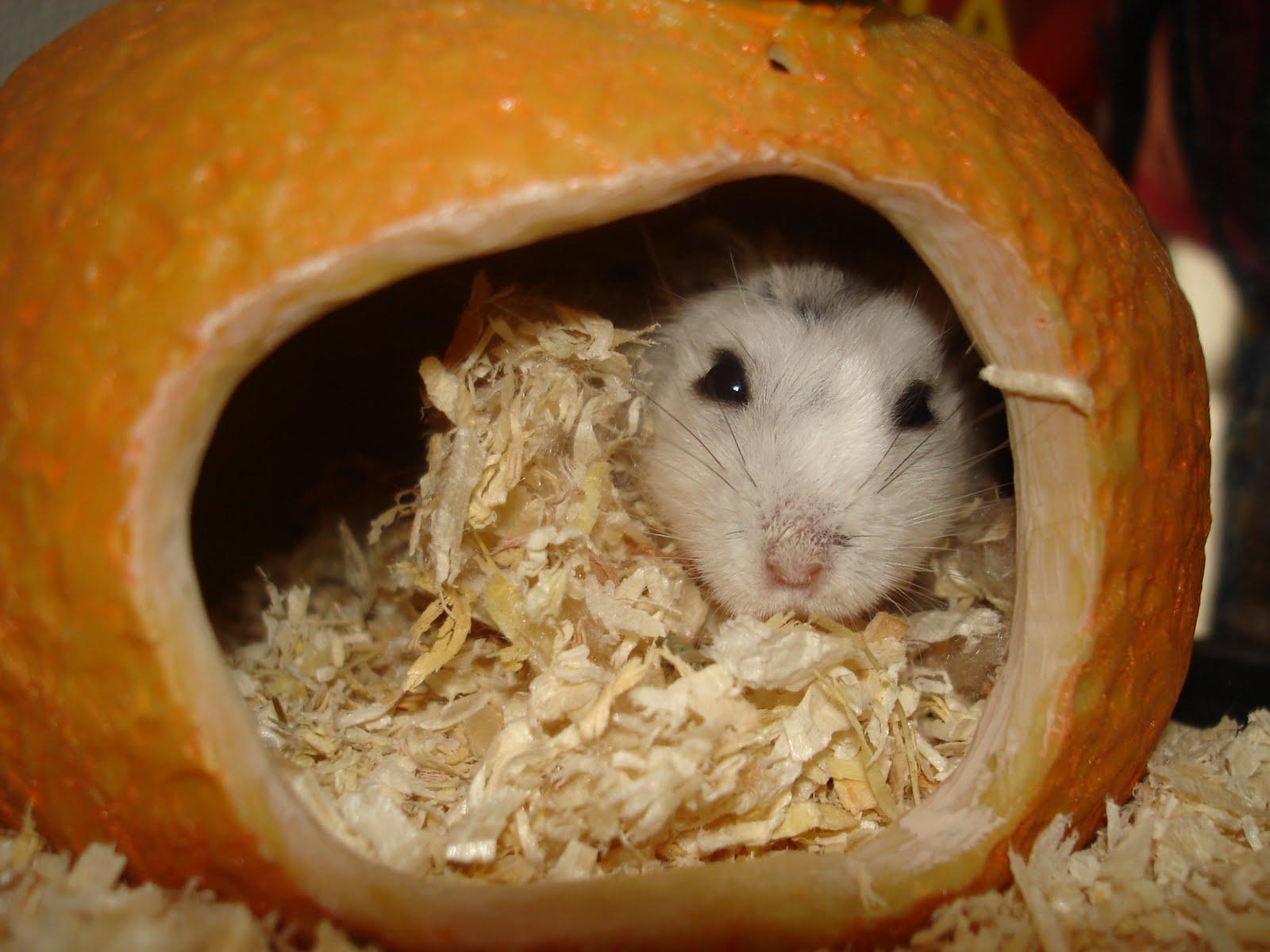
Hamster


The Biggest Animals Kingdom and in The World | Hamster | Hamsters are generally stocky, with tails shorter than body length, and have small furry ears, short, stocky legs and feet wide. Hamsters are very flexible, but their bones are brittle. Two species of hamsters belonging to the genus phodopus camp belli phodopus (Campbell dwarf hamster) and phodopus sungorus (Djungarian hamster) and two species of the genus Cricetulus barabensis Cricetulus (Chinese hamster striped) and Cricetulus griseus (Chinese hamster) have a dark stripe along head to tail. The species of the genus phodopus are the smallest, with bodies from 5.5 to 10.5 centimeters (2.2 to 4.1 inch) long, the largest is the European hamster (Cricetus Cricetus), measuring up to 34 centimeters (13 , 4 inch), with the exception of a short tail to 6 cm (2.4 inch). The Angora hamster, also known as long-haired or Teddy Bear hamster, which is a kind of hamster is the hamster race second, measuring up to 18 centimeters (7.1 inches)


Syrian hamsters (Mesocricetus auratus) are generally solitary and may fight to the death or put together. Some dwarf hamster species with others of the same species. Russian hamsters a close, monogamous relationship with their friends. It can even lead to obesity in hamsters.Reproductive life of the female takes about 18 months, but male hamsters remain fertile for much longer. The hamsters are seasonal breeders. The gestation period lasts 16 to 18 days before the golden hamsters, 18 to 21 days for the Russian hamsters, 21 to 23 days for Chinese hamsters and 23 to 30 for Roborovski hamsters.


Campbell's Dwarf Hamsters tend to have 4 to 8 in a litter, but to 13. Djungarian hamsters tend to have slightly smaller litters, as do Chinese and Roborovski hamsters.Chinese hamster women are known to be aggressive towards men, as held together too long. In some cases, the Chinese hamster dying after being attacked by the matrix. If breeding Chinese hamsters, it is advisable to separate the pair after mating or the hamsters will attack each other. Female Syrian hamsters are very aggressive towards the male hamsters and must be separated immediately after the selection to prevent an attack. Hamsters are born naked and blind in a nest that the mother will have prepared.


Most breeders sell the hamsters to shops when the hamsters are three to nine weeks. The best known species of hamster is the Syrian or golden hamster (Mesocricetus auratus), which type of hamster most commonly kept as pets. It is also sometimes called "fancy" hamster. Pet stores also have taken to calling them "honey bears", "panda", "Black Bear", "European black bears," "Polar Bear", "teddy bears" and "Dalmatian", depending on stains. Other hamsters that are kept as pets are the different types of "dwarf hamster".


Campbell dwarf hamster (phodopus camp belli) is the most common, they are also called "Russian Dwarfs", but many hamsters are from Russia, and so this ambiguous name does not sufficiently distinguish them from other species. The coat of the Djungarian or winter white Russian dwarf hamster (phodopus sungorus) is almost white in winter (when the hours of daylight decrease). The Roborovski Hamster (phodopus roborovskii) is very small and fast, making it difficult to keep as pets.Chinese hamsters (Cricetulus griseus), but not technically a "dwarf hamster" is true, is the only hamster with a prehensile tail (about 4 cm long), most hamsters have very short, non-grasping tails.There are also owners who raised their hamsters.
Find The Biggest Animals Kingdom and in The World

Numbat


The Biggest Animals Kingdom and in The World | Numbat | The Numbat is a small, colorful creature between 35 and 45 cm at 14:18) long including the tail, with a finely pointed muzzle and an important role, bushy tail on the same body length. The underside is cream or light gray, while the tail is covered with long gray hair streaked with white. Most ecosystems with a generous supply of termites have a fairly large creature with a long, thin, sticky tongue for penetrating termite colonies and powerful forelimbs with heavy claws. Like other mammals that eat ants or termites, the Numbat has degenerated jaw with a maximum of 50 very small non-functional teeth, and even if you can chew, so it is rare, because of the gentle nature of his diet.


Consequently, although all people have the same dental formula generally follows the single model Like many front-eating animals, the Numbat has a coating unusually long, narrow tongue with sticky saliva produced by large submandibular glands. Numbats also have a scent gland, sternum, which can be used for marking their territory Although termites Numbat located mainly using perfume, has the greatest visual acuity of a marsupial, and, unusual for marsupials, has a high percentage of cones in the retina. Numbats previously had faced South Australia, Western Australia in Wales, north-western New South. However, the range decreased significantly after the arrival of Europeans, and the species has survived in only two small parcels of land in the woods Dryandra and Perup Nature Reserve, both in Western Australia.


Numbats are insectivores and eat an exclusive diet of termites. An adult Numbat requires up to 20,000 termites each day. The only marsupial that is fully active during the day, the Numbat spends most of his time in search of termites. You dig the loose soil of termites with its front claws and capture with its long sticky tongue. Are known predators of carpet pythons numbats, introduced red fox, and various hawks, falcons and eagles. The animal usually remains in that territory during this period male and female territories overlap, and in season, breeding males will venture outside their normal home range to find partners.


While the Numbat has claws relatively powerful for its size, is not strong enough to get the termites in their concrete-like mound, and must wait until the termites are active. It uses a well-developed sense of smell to identify shallow tunnels and underground added that termites construct between the nest and feeding sites, which are usually a short distance below the soil surface, and most vulnerable to the Numbat digging claws. The Numbat synchronises its time with the activities of termites, which depends on temperature: in winter, it feeds from mid morning to mid afternoon in summer, rises earlier, takes refuge in the warmth of the day and feed again in the afternoon.


At night, the Numbat retreats to a nest, which can be a register or a hollow tree, or in a burrow, a tree typically close to 1-2 meters long, ending in a spherical chamber lined with soft plant material: grass, leaves, flowers and shredded bark. Numbats vocalizations are relatively few, but were reported to hiss, growl, or make 'silent' a repetitive sound when disturbed. Numbats race in February and March, normally producing one litter per year, although capable of producing a second if the first is lost. It was home to a wide range of forest habitats and semi-arid. The deliberate release of the European red fox in the 19th century, however, has erased the entire Numbat population of Victoria, NSW, South Australia and the Northern Territory, and almost all numbats in Western Australia.


Being diurnal, the Numbat is much more vulnerable to predation than most other marsupials of similar size: its natural predators, Little Eagle, Brown Goshawk, Collared Sparrowhawk and Carpet Python. When the government of Western Australia has implemented an experimental program of baiting Fox Dryandra (one of two remaining sites), Numbat observations increased by a factor of 40. Intensive research and conservation program since 1980 has managed to significantly increase the population Numbat, reintroductions and Fox free zones began. Despite the encouraging degree of success so far, the Numbat remains at high risk of extinction and is classified as endangered species.
Find The Biggest Animals Kingdom and in The World