Tampilkan postingan dengan label Herbivore. Tampilkan semua postingan

Selasa, 07 Agustus 2012

Rabbit


The Biggest Animals Kingdom and in The World | Rabbit | Rabbit habitat includes meadows, woods, forests, grasslands, deserts and wetlands Rabbits live in groups, and the most familiar species, the European rabbit, lives in underground burrows, or rabbit holes. A group is Warren Burrows More than half of the world population live rabbit in North America. Rabbits first in South America recently, as part of the Great American Interchange. A large part of the continent has only one species of rabbit, wallpaper, while most of the southern cone of South America is not a rabbit. European rabbit was introduced in many places around the world Long rabbit ears, which can last more than 10 cm (4 inches), are probably an adaptation for detecting predators.


Wild rabbits do not differ greatly in their body proportions or position, complete, egg-shaped bodies. Because rabbit epiglottis focuses on the soft palate, except when swallowing, forced ventilation is a rabbit nose. Rabbits, two sets of teeth teeth, one after the other. Rabbits are hindgut fermenters. Check the rabbit is about 10 times the stomach intestine is about 40% of the rabbit digestive tract. Muscles rabbit intestinal tract control makes it possible to separate the fiber material of the material more palatable fiber material is passed as faeces, while more nutritious material is encapsulated in a mucous membrane, which cecotrope. Cecotropes, also called "night feces" are rich in minerals, vitamins and proteins needed for the health of the rabbits. Rabbits eat these to their nutritional needs, which mucosa to nutrients by heartburn go for digestion in the intestines . This process allows rabbits to the necessary nutrients from their food.


Rabbits are prey animals therefore steadily and are aware of their surroundings. The cases, Mediterranean Europe, rabbits prey mainly red foxes, badgers, and Iberian lynx. Rabbits have a very wide field, and much of it is dedicated scanning overhead. The breeding season for most rabbits lasts nine months, from February to October. A kit (baby rabbit) can be weaned at about 4-5 weeks old. This means one season a female rabbit can produce up to 800 children, grandchildren and great grandchildren. Female rabbits are reflex ovulators. Female rabbit or not to lose clumps of hair during pregnancy.
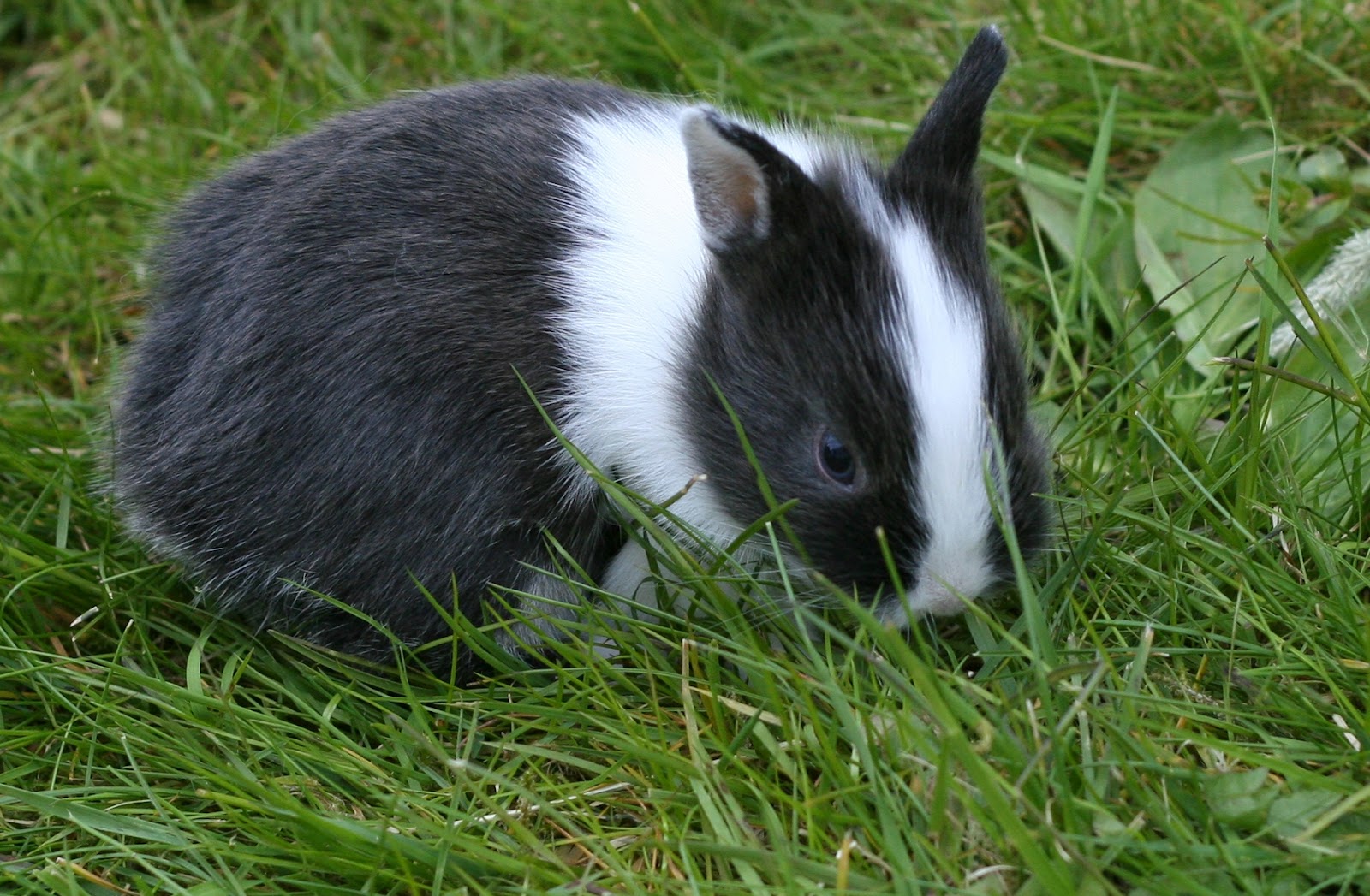

10 to 11 days after birth, baby rabbits eyes open and they start eating on their own in about 14 days. In about 6-8 months old (age that rabbits are fully grown), this layer is replaced by a final layer of adult streams twice a year thereafter. Rabbit life expectancy is about 9-12 world, the longest was 18 years. Rabbits are herbivores who feed by grazing on grass, forbs, and green weeds. Rabbits solve this problem by passing two distinct types of feces: hard droppings and soft black viscous pellets, the latter, which are consumed immediately. Rabbits reingest their droppings (rather than ruminate like cows and many other herbivores) to digest their food further and extract sufficient nutrients.


Meanwhile, the rabbit will also remove many hard fecal pellets, being waste pellets that will not be reingested. If the environment is relatively non-threatening, the rabbit will remain outdoors for many hours, grazing at intervals. While in the cave, rabbit pellets will reingest her occasional soft, partially digested, this is rarely observed, because the pellets are reingested they are produced. Soft pellets are usually produced several hours after grazing, after the hard pellets have all been excreted. After being disabled, they are eaten whole rabbit and redigested in a special part of the stomach.


Rabbits kept indoors are often referred to as a rabbit. Domestic rabbits are usually within a pen or cage and put rabbit can be performed safely and to exercise such an exercise pen, living or family room. Rabbits can be trained to use a litter box, and can learn to come when called. Rabbit, not in life can also serve as companions for their owners, typically living in a protected outdoor hutch. Pet rabbits are often additional space to move, simulating the open space a rabbit would traverse in the wild. Pens or lawn pens are often used to practice a safe place for rabbits to run business. Pet a rabbit's diet typically consists of unlimited Timothy hay or grass, a small amount of pellets, and a decent amount of fresh vegetables and have unlimited access to fresh, clean water. Rabbits are social animals. 


Rabbits can make good pets for children, where appropriate parental supervision is provided. As prey animals, rabbits are timid creatures alert enough to frighten easily. Older children and adolescents usually necessary maturity to ensure a rabbit European Leporids such as rabbits and hares are a food meat in Europe, South America, North America, parts of the Middle East. Rabbit is still sold in the UK butchers and markets and some supermarkets sell frozen rabbit meat. In addition, some started selling fresh rabbit meat with other games. Rabbit meat was once commonly sold in Sydney, Australia, suppliers that gives the name rugby league team the South Sydney Rabbitohs, but quickly became popular after the disease myxomatosis was introduced in an attempt to the rabbit population to remove wild (see Rabbit, also in Australia).


Rabbit meat is not popular in the Asia-Pacific. When used for food, rabbits are both hunted and raised for food. Traps or weapons are usually used in catching wild rabbits for food. In many regions, rabbits are also bred for meat, a practice called cuniculture. Rabbits can then be slain by hitting the back of the head, a practice that the term rabbit punch is derived. Rabbit meat is a source of quality protein. Rabbit products are generally classified in three ways, first the fryer. This is a young rabbit between 4.5 and 5 pounds and up to 9 weeks old. One of the most common types of rabbits are bred for meat is New Zealand white rabbit. There are many health problems with the use of rabbit tularemia one or rabbit fever. Another example is the so-called rabbit starvation, probably due to the lack of essential fatty acids of rabbit meat. Rabbits are a common food of large pythons, Burmese pythons and as the reticulated python, both in nature and in captivity. Rabbit skins are sometimes used for clothing and accessories such as scarves or hats. Angora rabbits are raised for long hair, fine, that can be harvested and sheared from the sheep. Rabbits are very good producers of manure, in addition their urine, which is high in nitrogen, makes lemon trees very productive.
Find The Biggest Animals Kingdom and in The World

Sabtu, 14 Juli 2012

Donkey


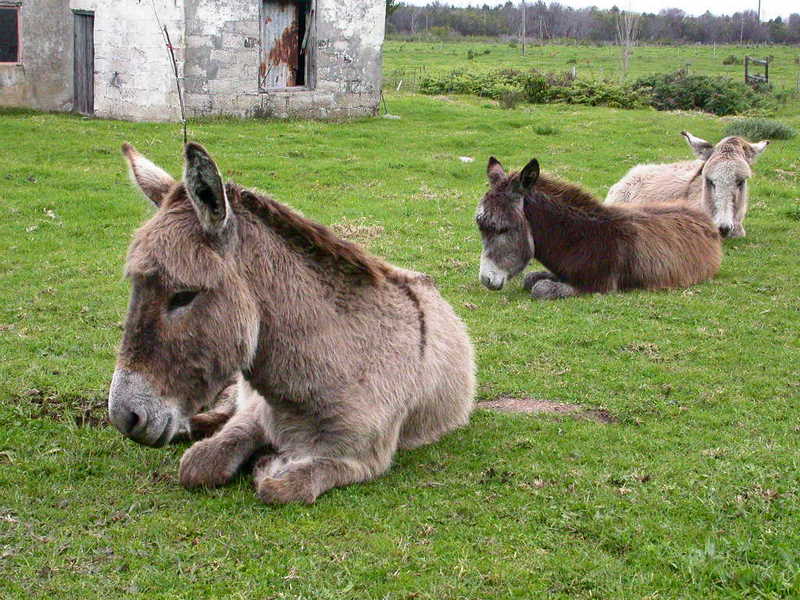
The Biggest Animals Kingdom and in The World | Donkey | Donkeys are of very different sizes, depending on breed and management. Donkey work in poorer countries have a life expectancy of 12-15 years in the richest countries, may last from 30 to 50 years. Donkeys are adapted to marginal desert areas. Every donkey is an adult action space, breeding in a large area can be dominated by a bush. The call loud or cry of a donkey, which usually lasts 20 seconds and can be heard for more than three kilometers, can help you stay in contact with other donkeys on the wide expanses of desert, donkeys have large ears that can pick up more sounds away, and can help to cool the blood of the donkey. Donkeys can be transmitted by biting, hitting with his front hooves or defend the kicks with the hind legs.


A donkey is usually pregnant for about 12 months, although the gestation period varies from 11 to 14 months, and usually results in an individual foal. Donkeys can intersect with other members of the horse kind, and are often crossed with horses. Some large breeds of asses of Martina Franca, as Donkey, the Baudet de Poitou and Mammoth Jack are only generated for the production of a mule. The hybrid between a stallion and a donkey is a mule, and is less common. Like other inter-species hybrids are usually sterile, mules and donkeys Donkeys have a bad reputation for stubbornness, but this has a much stronger sense of "self preservation", as issued by the horses have been allocated.


The ancestors of the modern donkey are the Nubian and Somalian subspecies of African wild ass. Remains of domestic donkeys from the fourth millennium BC, were found in Lower Egypt in Maadi, and it is believed that the domestication of the donkey has long been in the seventh and eighth millennium BC after the domestication of cattle, sheep and goats. By the end of the fourth millennium BC, the donkeys had spread to Southwest Asia, and the main breeding center was transferred to Mesopotamia from 1800 BC. With the second millennium BC, the donkey was brought to Europe, was introduced at the same time, as probably the wine, like the donkey with the Syrian god of wine, Dionysus is associated.


The first donkey North America, as the two met in Mexico by Juan de Zumarraga, the first bishop of Mexico, where the six arrived in December 1528, during the first donkey to reach what are now the United States across the Rio Great were with Juan de OƱate in April 1598, the donkey used as a workhorse for at least 5,000 years. After the human work, the donkey is the cheapest form of power farm. Donkeys are often associated with working with the residents at or below the subsistence level. Some cultures that forbid women to donkeys to work with oxen in agriculture does not extend that taboo, so they can be used by both sexes.


In developed countries, where it has been their use as beasts of burden, donkeys, mules father are used to protect sheep, donkey rides for children and tourists, and as pets. Donkeys can be touched or in the barn with horses and ponies, and is thought to have a calming effect on nervous horses. If a donkey is introduced to a mare and foal, the foal can turn the donkey for support after he was weaned from the mother. Some donkey or cow meat in Italy, which has the highest consumption of horse meat in Europe and where donkey meat is the main component of several regional courts, some 1,000 donkeys were slaughtered in 2010, which is about 100 tons of meat. Donkeys work must be shod. Donkey shoes are similar to horseshoes, but usually smaller, and without toe clips.


The donkey has a tough digestive system in which roughage effectively distributed through microbial activity hindgut fermentation in the cecum and colon. While there are significant structural differences between the gastrointestinal tract of a donkey and a horse, a donkey is more efficient digestion. Donkeys are also less susceptible to colic. The reasons for this difference are not fully understood, the donkey may have different intestinal flora on the horse, or have a longer retention time of the intestine. Donkeys obtain most of their energy from carbohydrates structural. In a lush climate, donkeys are prone to obesity and are at risk of laminitis. Around the world with free donkey work very poorly associated with the residents at or below the poverty line.


In temperate climates, the food available is often too rich and too fat, overfeeding can cause cause weight gain and obesity and metabolic disorders, as the founder (laminitis) and hyperlipidemia or gastric ulcers A male donkey (jack) with a female horse can be crossed to produce a mule. A male donkey with a female horse can be crossed to produce a mule. Horse-donkey hybrids are almost always sterile because horses have 64 chromosomes, while donkeys are 62, the production of offspring with 63 chromosomes. Mules are much more common than mules.  The above terms refer generally to the production of hybrid breeding a male zebra to a female donkey. Zebra mules, and zebret zebrinny all refer to cross a zebra with a male ass woman. Zebrinnies zedonkies because they are more rare than precious female zebras in captivity, when the production of purebred zebras there are not enough female zebras breeding in captivity, in order to save for hybridization, there is no such restriction on the number of women farm donkeys.
Find The Biggest Animals Kingdom and in The World

Deer


The Biggest Animals Kingdom and in The World | Deer | The word "deer" was originally a broad meaning, but in the course of time more accurately. For many larger deer man a "deer", as used for most other deer in the same terms as for cattle, is "bull" and "cow". The red deer is "deer", especially if more than five years, and the female is a "late", particularly when three or more years old, both terms are used for all kinds of deer, and were widely thus used in the past. Terms of young deer vary similarly, that more than a "flat" and that the largest species of the "calf" to be young of smaller species may be a child. A group of deer of any kind is a "herd". The relative adjective related to deer is cervine, as the name of the family "Cervidae" which is from the Latin cervus, "deer".


Deer are widespread, with representatives of indigenous peoples on every continent except Antarctica and Australia, but Africa has only one native species, Red Deer, is limited to the Atlas Mountains in the northwest of the continent. However, deer were introduced to South Africa Deer live in a variety of biomes, from tundra to rain forest. Although often associated with forest are many deer are ecotone species that live in transitional areas between forests and thickets (for cover) and prairie and savanna (open space). The majority of large deer species inhabit temperate mixed deciduous forest, mountain mixed coniferous forest, seasonal forest / dry tropical savannas and around the world. To grow beyond adjacent areas can also benefit deer access.


Some deer have a circumpolar distributed in North America and Eurasia. The highest concentration of large deer species in temperate North America is to be found between the mountainous regions of Alberta and British Columbia, where (can white-tailed deer, mule deer Caribou, Elk, and Moose) all five North American deer species in the Canadian Rockies and Columbia. This region has several sets of national parks including Mount Revelstoke National Park, Glacier National Park (Canada), National Park Yoho and Kootenay National Park in British Columbia and Banff National Park, Jasper National Park and Glacier National Park (USA) on the sides of Alberta and Montana. Habitats ranging from humid mountainside coniferous / mixed forest habitats to subalpine / pine forests and mountain meadows above dry.


Mule deer and elk between the two alpine meadows and pine forests to migrate lower and tend to be more common in this region. Elk also inhabit river valleys, they share with white-tailed deer. The Eurasian continent (including the Indian subcontinent) has found the greatest number of species of deer in the world, with most species in Asia. Current deer populations in Europe are the result of a historic man-made discharges of this kind, first on the Mediterranean regions of Europe, then eventually to the rest of Europe. Historically, Europe's deer species shared their deciduous forest habitat with other herbivores such as the extinct Tarpan (forest horse), extinct aurochs (forest ox), and in danger of bison (Bison).


The highest concentration of large deer species in temperate Asia occurs in deciduous forests, mountain coniferous forests, and taiga bordering North Korea, Manchuria (Northeast China), and the Ussuri Region (Russia). These include some of the richest deciduous and coniferous forests of the world where one can Siberian roe deer, sika deer, elk, moose and find. Red deer, sika deer, as deer, Thorold, the Central Asian Red Deer, elk, and since time immemorial for their antlers run by Han Chinese, Turkic peoples, Tungusic peoples, Mongolians and Koreans.


The highest concentration of large deer species in the tropics occurs in Southern Asia region of Northern India, Indo-Gangetic plain and the Terai region of Nepal. These fertile plains consist of tropical moist deciduous, dry deciduous forests, and wet and dry savannah, home to chital hog, deer, barasingha, Indian Sambar, and Indian muntjac are. Hog deer are solitary and have densities lower than the Indian muntjac. Deer can be used in several national parks in India, Nepal, Sri Lanka and those of Kanha National Park, Dudhwa National Park and Chitwan National Park are the most visible. Sri Lanka Wilpattu National Park Yala National Park and have large herds of chital and sambar Indian.


The Chao Praya River Valley of Thailand was once primarily tropical deciduous forest, moist and humid savanna shown that populations of deer, hog deer, the now-extinct Schomburgk, the Eld Deer, Indian Sambar, and Indian muntjac. Both deer and hog deer are rare ELD, whereas Indian Sambar and Indian muntjac thrive in protected national parks such as Khao Yai. Many of these South Asian and Southeast Asian species of deer also share their habitat with various herbivores such as elephants, several species of Asian rhino, various antelope species (such as nilgai, four horned antelope, black, and the Indian gazelle India), and wild oxen (like wild Asian water buffalo, gaur, banteng and kouprey).


Australia has six introduced species of deer, the sustainable market introduction of wild populations acclimatization society had been received in the 19 Century. It is deer, sambar deer, pigs and Rusa and Chital. Deer introduced to New Zealand have been domesticated in 1851 by English and Scottish camp in Deer farms by the late 1960s and are often animals there now. Seven other species of deer were introduced to New Zealand, but none is as common as deer. A deer is a deer with a standard brown and white spots, which is not caused by parasites or diseases seen. Deer have always had economic importance for humans. Deer were originally brought to New Zealand by European settlers, and the deer population has grown by leaps and bounds.


Increases in deer farming in New Zealand a significant economic activity with more than 3,000 companies that carry more than one million deer in total. Deer products are exported to over 50 countries, with New Zealand still recognized as a source of quality deer and co-products. Automobile collisions with deer can impose a significant cost factor for the economy. The sight of a deer standing motionless, into the spotlight to the phrase "deer in the headlights.In 2008, 733.998 Licensed Deer Hunters over 489 922 white-tailed deer in an attempt, the deer population and the spread of the disease harvested under control. These hunters purchased more than 1.5 million deer harvest tag. The economic value of deer hunting for the Michigan economy is considerable. For example, in 2006, hunters spent $ 507 million U.S. white-tailed deer hunting in Michigan.


A number of deer hybrids are designed to improve the yield of the game in creation. American elk (wapiti or) and Red Deer from the Old World can produce fertile offspring in captivity, and were as a species. Recent DNA studies of animal behavior and morphology and antler characteristics have shown that there is one, but three species of Red Deer: European Red Deer, Central Asian Red Deer, moose and Americans. Wapiti have been introduced in some European cattle deer to improve the type of deer, but not always with the desired improvement. In New Zealand, where deer are introduced, there are hybrid zones between populations of deer and elk in North America and between Sika deer and deer populations. In New Zealand, deer have been artificially hybridized with Pere David Deer, a farmed deer which gives birth to create in the spring. The first hybrids were created by artificial insemination and back-crossed deer. However, hybrid offspring survive only in captivity free of predators.


In Canada, the creation of European and hybrid deer deer as a threat to native Wapiti. In Britain, the introduction of sika deer as a threat to native Red Deer. First Hybrid sika / red deer occur when young Sika stags expand their range established in areas and Sika deer have no mate to Hinds. Many of the Sika Deer which escaped from British parks were probably already hybrids for this reason. Captive deer were covered in white-tailed deer. Both deer male / female white-tailed deer and white-tailed deer male / female Mule Deer matings have produced hybrids.


Captive hybrids, even a hybrid of an eighth white-tail/seven-eighths mule deer an erratic escape behavior and would probably not survive to reproductive age not hybrids to survive on ranches game where both types are operated, where predators are controlled by people . Deer are represented in heraldry by the stag or deer, or, less frequently, from behind, and the deer (a young deer up to two years). Deer heads and antlers also appear in the form of charges. The old name was simply appears Cerf for deer, and especially the head, arms in the old. Several Norwegian municipalities have a deer or deer head in his arms: Gjemnes, Hitra Hjartdal, Rendalen and Voss.
Find The Biggest Animals Kingdom and in The World

Jumat, 13 Juli 2012

Elephant


The Biggest Animals Kingdom and in The World | Elephant | Elephant and its variations are archaic spellings elephant. Besides elephants, is the word used to refer to ivory, elephant tusks, musical horns made of elephant tusks, or horns like a musical instrument like. The French word owes something to both Old High German olbenta "camel", and Latin elephantus "elephant", a word of Greek origin. The African Elephant genus contains two species and those species of the Asian elephant is the only remaining member of the Asian Elephant genus, but can be divided into four subspecies. The African and Asian elephants diverged from a common ancestor about 7.6 million years ago.


African elephants, two finger-shaped projections on the end of the stem, while the Asians have only one. Elephant's trunk is sensitive enough to pick up a single blade of grass, yet strong enough to rip branches of a tree. Most herbivores (plant eaters, like the elephant) possess teeth adapted for tearing and cutting plant material. However, except for children or sick, elephants always use their trunks to tear up their food and place it in your mouth. If the desired food is too high, the elephant wraps its trunk around the tree or branch and shake its food loose or sometimes simply to precipitate the tree altogether. Elephants suck water up the trunk to 14 liters (15 liters) at a time and then blow in the mouth. Elephants also strive for the water to spray on their body when bathing. Elephants greet family interwoven their tribes, like a handshake.


Elephants
can defend very well by waving their trunks to prevent unwanted intruders or by grasping and throwing. An elephant is also dependent on the strain to his highly developed sense of smell. Some elephants have been plagued with floppy trunk syndrome. The tusks of an elephant, the second upper incisors. Tusks grow continuously, tusks of adult males grow to about 18 cm (7 inches) per year. Like people, mostly from the right or left, elephants are usually right and left canines. Both male and female African elephants have large tusks that can reach over 3 m (10 ft) long and weigh over 90 kg (200 €). In the Asian species, only males have large tusks. Female Asians have tusks which are very small or absent.


The desire for elephant ivory is an important factor in reducing the elephant population in the world. Elephants are colloquially called pachyderms (from their original scientific classification), which means thick-skinned animals. The skin of an elephant is very difficult for most of his body and measures about 2.5 centimeters (1.0 inches) thick.  Flounder is an important behavior in elephant society. Although tough, an elephant's skin is very sensitive. Without regular mud baths to protect against sunburn, but also insect bites and moisture loss, the skin of an elephant suffering from severe damage. After bathing, the elephant uses its trunk is usually the ground to blow on his body to help dry and bake on its new protective layer.


Revolve also helps the skin in regulating body temperature. The elephants have difficulty releasing heat through the skin, because in proportion to body size, have very little. The mass ratio of an elephant to the skin surface is many times that a human being. The elephants have also been observed by increasing the legs to the soles of the feet to expose, probably in an attempt to more skin exposed to the air. Since wild elephants live in very warm climates, they need another way of getting rid of excess heat. The legs of an elephant are about the form of columns or pillars, as they should be in support of its mass. The elephant has less muscle strength to stand because of the straight legs and big feet are filled. Indian elephants, on the contrary, often lie.


The feet of an elephant are nearly round. African elephants have three nails on each hind foot and four on each front foot. Indian elephants have four nails on each hind foot and five on each front foot.  Under the weight of the elephant, the waves of the foot, but decreases when the weight is removed. An elephant can sink into the mud, but could easily pull his leg, because the feet become smaller when they are raised Elephants swim well, but can not trot, canter or jump. No "air phase", the fastest pace does not meet all performance criteria, such as elephants always have at least one foot on the ground. However, an elephant moving fast uses its legs as many other animals which are exported, with the hips and shoulders falling and then rising, while the feet on the ground. In this step an elephant ten feet above the ground at once.  The tests at the Thai Elephant Conservation Centre will be given to the fast-moving elephants' run 'to show the front legs but walk' with the rear legs.


In tests at the Thai Elephant Conservation Center, the fastest elephants reached a top speed of 18 km / h (11 mph).  Spring-kinetic, such as may explain the difference between the movement of elephants and other animals. Large ears flapping of an elephant are also very important for the regulation of temperature. Elephant ears are made of a thin layer of skin over cartilage and dense network of blood vessels. On hot days, elephants fighting their ears constantly, creating a slight breeze.  The differences in size ears of African elephants and Asian countries can be explained partly by their geographical distribution.  Asians live farther north in cooler climates, and thus have smaller ears. If an elephant wants to intimidate a predator or rival, it will spread your ears wide as a more solid and impressive.  Joyce Poole, a well known elephant researcher, has theorized that the males fanning their ears in an attempt to help propel this "elephant Cologne" large distances Elephants live in a structured social order. The social life of male and female elephants are very different.


Adult men, on the other hand, usually live solitary life. The social circle of the female elephant does not stop at the small family.  When a group is too large, a part of the older daughters break off and form their own group of small size. The life of the adult male is very different.  While men live solitary lives in the first place, sometimes the form of free association with other males. These groups are called bachelor herds. The men spend much more time than women who fight for dominance with each other. Only the most dominant males will be allowed to mate with females in cycling. During the mating season, the battles are extremely aggressive, and occasionally an elephant wounded.  With a mass just over 5 kg (11 lb), elephant brains are larger than those of any other land animal.


A wide range of behaviors associated with intelligence are attributed to elephants, including those associated with pain, making music, art, altruism, allomothering, play, use of tools, compassion and self-awareness. The elephant is supposed to belong equally to the field of intelligence in cetaceans and nonhuman primates. The elephant brain is similar to that of humans in terms of structure and complexity, the brains of the elephant has a gyral pattern more complex and numerous convolutes, or folds of the brains, those of humans, primates or carnivores, but less complex than cetaceans.


Elephants do a number of sounds during the communication. Elephants are known for their great fanfare, that are created when the animal breathes through his nostrils.  Elephants have also rumble growls when saying goodbye.  Elephants can communicate over long distances by producing and receiving low frequency sound (infrasound), a sub-sonic rumbling which can travel through the air and the ground much further than higher frequencies.  The elimination presumably increase the ground contact and the sensitivity of the remaining legs. Pioneering research in elephant infra sound communication was done by Katy Payne, of the Elephant Listening Project, and is described in her book Silent Thunder.  Joyce Poole has also begun to decode elephant expressions that are included in many years of observation, in the hope of a lexicon based on a systematic catalog of elephant sounds.
Find The Biggest Animals Kingdom and in The World
Rabu, 11 Juli 2012

Horse


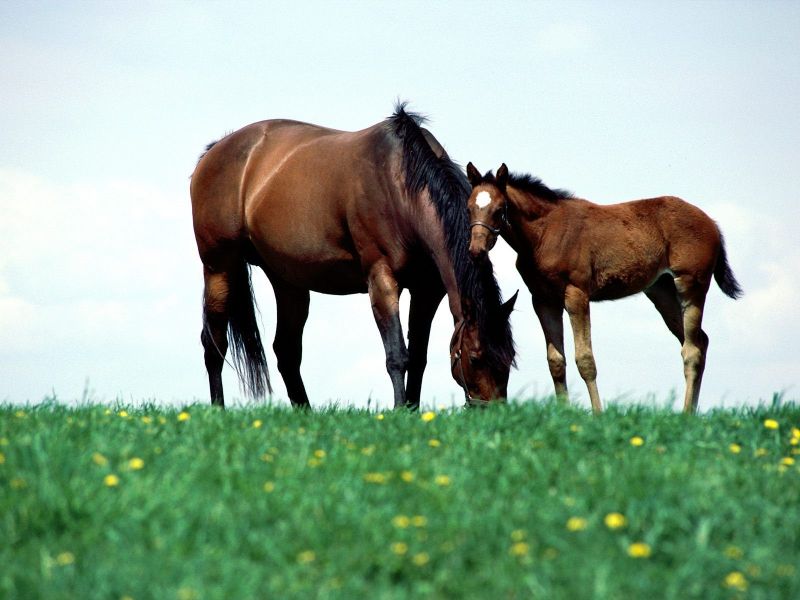
The Biggest Animals Kingdom and in The World | Horse | Depending on the breed, management and the environment, the modern domestic horse has a life expectancy of 25 to 30 years. In modern times, Sugar Puff, who had been listed in the Guinness Book of Records as the oldest horse in the living world, died in 2007 at age 56. The English-speaking world measures the height of horses in hands and inches: on the one hand equals 4 inches (101.6 mm). Great riding horses usually start at about 15.2 hands (62 inches, 157 cm) and often are as tall as 17 hands (68 inches, 173 cm), weight from 500 to 600 kilograms (1,100 to 1,300 pounds). Heavy or draft horses tend to be at least 16 hands (64 inches, 163 cm) tall and can be as high as 18 hands (72 inches, 183 cm) tall.


The largest horse in recorded history was probably a Shire horse named Mammoth, born in 1848. The current record for the world's smallest horse is Thumbelina, a fully mature miniature horse affected by dwarfism. She is 17 inches (43 cm) tall and weighs 57 pounds (26 kg) Foals are taxonomically the same animals horses. The distinction between a horse and a pony is commonly done on the basis of height, especially for competition. However, height alone is not determinative, the difference between horses and ponies may also include aspects of the phenotype, including the conformation and temperament. The traditional rule of the height of a horse or pony at maturity is 14.2 hands (58 inches or 147 cm).


In Australia, the horses are considered less than 14 hands (56 inches, 142 cm), for competition in the Western Division of the United States Equestrian Federation, the limit is 14.1 hands (57 inches, 145 cm) Federation Equestre Internationale, body global governance of sport for the horse, use the metric system and defines a colt as a horse of less than 148 centimeters (58.27 inches) at withers without shoes, a little 'more than 14, 2 h, and 149 centimeters ( 58.66 inches), or a little over an hour and a half 14.2, with the shoes. Records of the breed of horses that normally make people, both under and over 14.2 h in all animals of this breed of horses, regardless of height Conversely, certain breeds of horses may have features in common with horses, and individuals may occasionally mature at over 14.2 h, but is still considered ponies.


On the contrary, the races, such as Falabella and other miniature horses, which may be not higher than 30 inches (76 cm), are classified according to their data, such as very young horses, ponies not. Horses have a wide range of coat colors and distinctive signs, described by a specialized vocabulary. Often, a horse is classified first coat color, race or sex before. The horses of the same color can be distinguished from one another by white spots, which, together with different localization models are inherited separately from the color of the coat. Many genes that create the horse coat colors and patterns were identified.
Horses that have a layer of white are often incorrectly, a horse that looks "white" is usually gray, middle-aged or older. The only white horses are born with a proper predominantly white coat and pink skin, rare. Different genetic and independently capable of producing white color coat in horses, including several different alleles of dominant white and Sabino-1 gene. However, there is "albino" is defined as horses that have pink skin and red eyes. The horses are early varieties, and foals are able to be productive in a short time after birth.


The horses, ponies, in particular, are sometimes physically able to breed at 18 months, but domestic horses are rarely allowed to breed before the age of three years, women in particular. Horses four years old are considered mature, although the skeleton continues to develop normally until the age of six years, the aging also depends on the size of the horse race, gender and quality of care. Larger horses have large bones, therefore, not only the bones take longer to form the bone tissue, but the epiphyseal plates are larger and longer in the conversion of bone cartilage.

Although Thoroughbred race horses are put on the track just two years in some countries, horses specifically bred for sports such as dressage are generally not put a saddle until three or four years, because bones and muscles are not solidly developed. For endurance riding competition, horses are not considered mature enough to compete up to a total of 60 calendar months (five years) of age. The senses of the horse are generally superior to those of a human being.  This means that horses have a visual field of more than 350 °, with about 65 degrees of binocular vision of being and remaining 285 ° monocular vision. Horses have a great day and night vision, but have two color, or dichromatic vision, color vision is something like red-green color blindness in humans, in certain colors, the colors, especially red, and the like, appear as a shade green.


The sense of a horse of touch is highly developed. Horses feel as thin as a contact insect landing anywhere in the body. Horses usually do not eat poisonous plants. However, there are exceptions, and occasionally horses eat toxic amounts of poisonous plants, although not enough healthy foods. Gallop averages 40 to 48 km / h (25 to 30 mph), but the world record for a horse galloping in a short sprint is 88 km / h (55 mph). In addition to these basic steps, some horses do a jump stop, instead of trot. Often wandering Aires genetic in some breeds, known collectively as gaited horses. Often replace gaited horses to trot, with an air of wandering. Horses are prey animals with a strong fight or flight. The most light horse riding breeds were developed for speed, agility, quickness and strength, natural qualities that extend from their wild ancestors. However, through selective breeding, some breeds are very docile horses, horses towing especially true. Horses are herd animals, with a clear hierarchy of rank, led by a dominant individual, usually a mare.


Many horses will be difficult to manage if they are isolated, but with training, the horses can learn to accept a human as a mate, and then be comfortable away from other horses. The studies assessed the intelligence of horses in the areas of problem solving, speed of learning and retention of knowledge. The results show that horses are able to learn simple, but are also able to solve problems involving advanced cognitive categorization and concept learning. Recent studies also suggest the horses are able to say whether the amount is less than four. Domestic horses tend to face greater mental challenges that the wild horses, because they live in artificial environments that discourage instinctive behavior, and learning tasks that are not natural, horses are creatures of habit that respond and adapt well to the regulations, and meet best when routines and techniques are used consistently.

Other horses that regularly deal in mind that personality may also play an independent role of intelligence to determine how individual animals respond to different experiences Horses are able to sleep both standing and lying. Horses sleep better when in groups because some animals to sleep, while others stand guard to see predators. A horse kept alone will not sleep well because its instincts are to keep a constant eye to the dangers. Unlike humans, horses do not sleep in a period of solid, uninterrupted time, but take many short breaks. The average waiting time of a domestic horse that is 2.9 hours per day. The horses must rest to reach the REM sleep.  This condition differs from narcolepsy, though horses may also suffer from this disorder.


Sometimes the horses are correctly or incorrectly called "pure blood". Thoroughbred horse racing is a specification, while a "pure race" is a horse (or any other animal) with a pedigree recognized by the definition of a race record. Breeds are groups of horses with distinctive features that are transmitted consistently to their children, such as shape, color, performance capacity, or disposition. The horses were selected because their domestication. A prime example of people who practice selective breeding of horses were Bedouins, who had a reputation of care practices, keeping extensive pedigrees of their Arabian horses and placing great value bloodlines pure. Other breeds of horses developed specifically for agricultural work in the light of the road car business, sports, or simply as pets.


One of the earliest formal registries was General Stud Book Thoroughbred, started in 1791 and again the foundation of thoroughbred horse racing. There are over 300 breeds of horses in the world today. Throughout the world, horses play a role in human cultures, and have done so for millennia. The horses used for leisure, sports, and business purposes. It is estimated that 9.5 million horses in the United States. The American Horse Council estimates that in relation to the horse, the activities have a direct impact on the U.S. economy over $ 39 million dollars, and when indirect costs are considered, the impact is more than $ 102 billion in 2004, a "poll" conducted by Animal Planet, over 50,000 viewers from 73 countries voted for the horse as a beast of a favorite room in the world.


Sometimes the horses are mounted without a saddle, and sometimes the horses are trained to perform without bridle or other headgear. Many horses are also guided, which requires a wiring harness, bridle, and a certain type of vehicle The horses are grazing animals, and their main source of nutrients is of good quality hay or pasture forage.  Although horses are adapted to live outside, needing protection against wind and precipitation, which can vary from a simple shed or shelter to an elaborate stable. If horses are kept in a barn, requires regular daily exercise for their physical and mental wellbeing. Regular grooming is also useful to help the horse maintain good health of the hair and the skin.
Find The Biggest Animals Kingdom and in The World

Jumat, 06 Juli 2012

Bee


The Biggest Animals Kingdom and in The World | Bee | Bees play an important role in pollinating flowering plants, and are the major type of pollinators in ecosystems that contain flowering plants. Bees either focus on gathering nectar or pollen collection in line with demand, especially in social species. Bees collect nectar may accomplish pollination, but bees that are deliberately gathering pollen are more efficient pollinators.


Monoculture and the massive decline of many bee species (wild and domesticated) have increasingly caused honey bee keepers to become migratory so that bees can be concentrated in the seasonal variation in areas greater than the demand for pollination. Most bees are fuzzy and carry an electrostatic charge, which facilitates the adherence of pollen. Female bees periodically stop foraging and groom themselves to pack the pollen into the scopa, which is on the legs in most bees, and the ventral abdomen on others, and published in specialized pollen baskets on the legs of bees and their families.

A small number of plants produce nutritious floral oils rather than pollen, which is collected and used by bees oligolectic. A small subgroup of stingless bees, called "vulture bees", is specialized to feed on carrion, and these are the only bees that do not use plant products as food. In New Zealand scientists have discovered that three kinds of native bees have evolved to open flower buds of mistletoe native tetrapetala Peraxilla. Nowhere else in the world, the bees have demonstrated the ability to open explosives flowers adapted birds.


Visiting flowers can be dangerous business. Many bugs and crab spiders murderous hide in flowers to capture unwary bees. Other bees are lost to birds in flight. Insecticides used on blooming plants kill many bees, both by direct poisoning and contamination of the food they eat. The value of the fraction of bees depends partly on the effectiveness of individual bees, but also from the same population. Thus, while bumblebees have been found about ten times more efficient pollinators on cucurbits, the total return of a colony of bees is much greater because a larger number. other bee species, such as Mason bees are increasingly cultured and used to meet the pollination needs of agriculture.

Native pollinators include bumblebees and solitary bees, which often survive in refuge in wild areas away from agricultural spraying, but it can still be poisoned in massive spray programs for mosquitoes, moths, insects or other pests. The rules of the law of the United Kingdom in 1980, API has been designed to stop the decline of bees Bees, like ants, are a specialized form of wasp. The ancestors of bees were wasps in the family Crabronidae, and therefore predators of other insects. Recently reported bee fossil, Melittosphex example, is considered "an extinct lineage of pollen-collecting Apoidea sister to modern bees," and dates of Early Cretaceous (about 100 million years).


The first flowers were pollinated animal pollinated by insects such as beetles, so that the syndrome of insect pollination was well established before bees first appeared.  Among the groups of bees living, the "short-tongued" bee family Colletidae taxon has traditionally been considered more "primitive", and his sister for the rest of the bees. This subject is still under debate, and phylogenetic relationships among bee families are poorly understood. Bees may be solitary or live in different communities. The most advanced of these are eusocial colonies found among the bees, bumble bees and stingless bees. Sociality, of several types, is believed to have evolved separately many times within the bees.

There are many species of eusocial bees highly eusocial bees more primitive, but have rarely been studied. The vast majority are in the family Halictidae, or "sweat bees". The Most species have a single season colony cycle, even in the tropics, and only mated females (future queens, or "gynes") hibernate (called diapause). Some species have long active seasons and attain colony sizes in the hundreds. The orchid bees include a number of primitive eusocial species with similar biology. Some species of bees allodapine (carpenter bees relatives) also primitively eusocial colonies, with unusual levels of interaction between adult bees and brood in the developing world. This system is also visible in some bees and bumblebees.


Highly eusocial bees live in colonies. Each colony has one queen, many workers and, in certain phases of the colony cycle, drones. Bumblebees (Bombus terrestris, Bombus pratorum, et al.) The queen starts a nest on its own (unlike queens of honey bees and stingless bees which start nests by swarms in the company of a large labor force). Bumblebee colonies are generally 50 to 200 bees at peak population, which occurs in mid to late summer. Nest architecture is simple, limited by the size of the nest cavity (pre-existing), and colonies are rarely perennial. Bumblebee queens sometimes seek winter refuge in beehives, where they are sometimes found dead in the spring by beekeepers, said probably to death by bees.

Bees most other families, including species of bees, like carpenter bee eastern (Xylocopa virginica), alfalfa leafcutter bee (Megachile rotundata), orchard mason bee (Osmia lignaria) and hornfaced bee (Osmia cornifrons ) are solitary in the sense that every woman is fertile, and generally inhabits a nest she constructs. There are no worker bees for these species. Solitary bees usually produce no honey or beeswax. They are immune to the mites and Varroa mites, but have their own parasites, pests and diseases (see also bee diseases). Solitary bees are important pollinators, and pollen is collected to supply the nest with food for their offspring. Some solitary bees have very advanced types of pollen carrying structures on their bodies. A very few species of solitary bees are increasingly cultured for commercial pollination.


Solitary bees are often oligoleges, since only gather pollen from one or a few species or genera of plants, in contrast to bees and bumblebees which are generalists). There are known bees are nectar specialists oligolectic many bees will visit multiple plants for nectar, but there are no bees which visit only one plant for nectar while also gathering pollen from many different sources . Specialized pollinators also include bee species that gather floral oils instead of pollen, and male orchid bees, which gather aromatic compounds from orchids (one of the only cases where male bees are effective pollinators ). In very rare cases a single species of bee can effectively pollinate a plant species, and some plants are in danger, at least in part because their pollinator is dying.

Solitary bees create nests in hollow reeds or twigs, holes in wood, or, more commonly, in tunnels in the ground. A nest may consist of many cells. Provide nest boxes for solitary bees is increasingly popular for gardeners. Solitary bees are either stingless or very unlikely to sting (only in self defense, if ever). Large groups of solitary bee nests are called aggregations, to distinguish them from colonies. Cleptoparasitic bees, commonly called "cuckoo bees" because their behavior is similar to cuckoo birds, occur in several bee families, though the name is technically best applied to the subfamily Nomadinae APID. Females of these bees have no pollen gathering structures (broom), and they build their nests. typically enter the nests of pollen collecting species and lay their eggs in the cells indicated by the host bee.


When the cuckoo bee larva hatches it consumes pollen ball of the host larva, and if the kleptoparasite women have not already done so, kills and eats the host larva. In some cases where the hosts are social species, the kleptoparasite remains in the host nest and lays many eggs, sometimes even killing the host queen and replacing it. Cleptoparasitic many bees are closely related, and resemble, their hosts in looks and size, (ie, the Bombus subgenus Psithyrus, which are parasitic bumblebees that infiltrate nests of other species in the subgenera of Bombus). Others parasitize bees in different families, as a Townsendiella Nomadine ApID, a species in a Hesperapis kleptoparasite dasypodaid gender, while other birds and bees, which are generally halictid attack.

Four bee families (Andrenidae, Colletidae, Halictidae and Apidae) contain some species that are crepuscular (this may be the type of Vespertine or morning). This led to widespread belief, that bees "violate aerodynamic theory", but in reality it merely confirms that bees do not engage fixed-wing flight, and that their flight is explained by the mechanics, such as those used by helicopters. In 2005, Michael Dickinson and his Caltech colleagues studied honey bee flight with the help of high-speed cinematography and a giant robotic mock-up of a bee wing. Increased frequency of flapping wings with decreasing size of the genre, but as a flapping of bees covering a small flap of approximately 230 times per second, faster than a fly (200 times per second) which is 80 times smaller.


Journalist Bee Wilson states that the image of a community of bees "occurs from ancient to modern times, in Aristotle and Plato, Virgil and Seneca, in Erasmus and Shakespeare, Tolstoy, and by social theorists Bernard Mandeville and Karl Marx. Despite the pain of bee stings and the stereotype of insects as pests, bees are generally held in high esteem. Bees are one of the few insects used on advertisements frequently used to illustrate honey and foods made with honey (as Honey Nut Cheerios). In ancient Egypt, the bee was seen to symbolize the land of Lower Egypt, with Pharaoh being listed as "He who Sedge and Bee" (sedge represents Upper Egypt). Although a bee sting can be fatal for people with allergies, virtually all species of bees are not aggressive so quiet and many can not sting at all. Humans are often a greater danger to bees, how bees can be affected or injured by encounters with toxic chemicals in the environment (see also Bees and toxic chemicals).
Find The Biggest Animals Kingdom and in The World