Tampilkan postingan dengan label Owl. Tampilkan semua postingan

Selasa, 09 April 2013

Cuban Screech


The Biggest Animals Kingdom and in The World | Cuban Screech | Like other owls, owl females larger than males of their species. Have developed and hooked beak raptor claws well. Owls hunt from perches in semi-open landscapes. They prefer places where there are old trees with cavities that host their prey, insects, reptiles, small mammals such as bats, mice and other small birds included. Owls have good hearing, seeks help from their prey in a habitat. They also have well developed claws and curved beak prey, both tear. Their prey into pieces small enough to swallow easily used usually carry their prey in their nests, presumably to pass up the opportunity to save your food more than a bird of prey. Owls, especially tapeworms. During the breeding season in late winter, but males build nests in cavities, sometimes reusing abandoned nests of other animals, in an attempt to attract females.


The young of most owls are altricial at semialtricial. Owls in the Northeast United ec revealed. New Jersey, New York, owls, etc. are named for their piercing calls. Clarity of many species of owls was performed for the first time in a very different calls outside like birds from neighboring regions were observed. A fossil owl from the late Pliocene of Kansas (which is almost identical to Screech Owls East and West), shows a long-term presence of these birds in the Americas, while fossil horned owl peers found are very similar In the Eurasian Scops Onix Mallorca. The owl, another procoracoid positioning (at least before) and the coracoid bone compared to other owls of the New World During the late 19th century ornithologists knew little of the variation of these mysterious birds often live in remote locations, with each new taxon described some differences between the Old and the New World "owls" scops became increasingly important. Namely, scops give a whistle call or a series of shrill whistles, with less than four different calls per second.


There are some other differences, such as gold scops owls down often and rarely seen owls, but the difference in sound is very noticeable. Firstly, in 1848, was dismissed Megascops owls. Then the great owl apomorphic White-throated Screech of the Andes in the monotypic genus Macabre was laid in 1854. Gym was founded the same year for the owl Puerto Rico, and the owl bare legs (or "Cuban Screech Owl") was separated into Gymnoglaux and subsequent years, the latter species has sometimes been associated with Gymnasio by later authors. The third edition of the AOU list in 1910 up owls back in Otus. In 2003, the AOU formally accepted Megascops new genre.
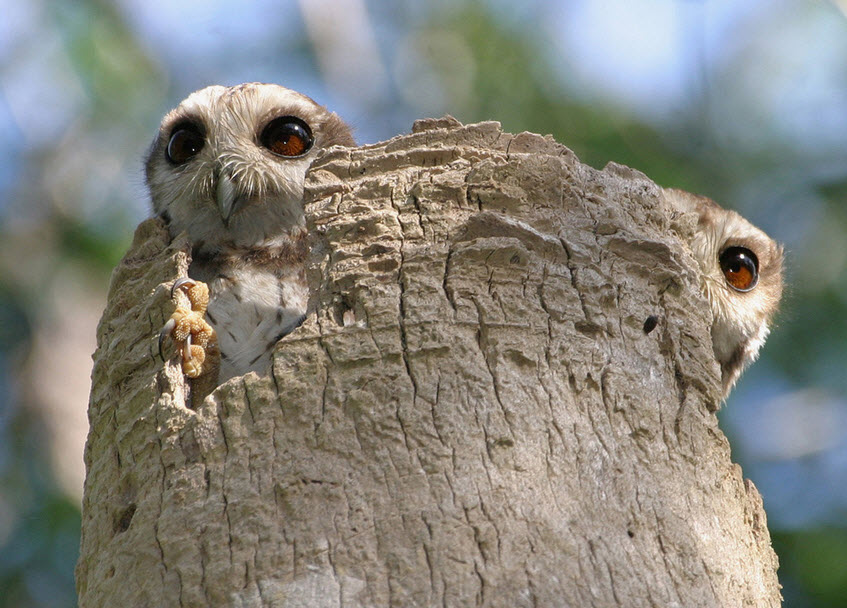

It was also confirmed that the owl bare legs. Sufficiently clear to justify the separation was in a separate genus Screech Owl Puerto Rico, but only slightly different Megascops. In addition, the white owl bra as part of an ancient lineage Megascops like the owl and Tropical Screech Owl Whiskered already recognized that the ambiguous relationship - and, in fact, the structure of the application is very different from what last. Fferent your approximate Whiskered Screech Owl south (Megascops Trichopsis mesamericanus) is probably the result of strong genetic drift.
Find The Biggest Animals Kingdom and in The World

Kamis, 03 Januari 2013

Great Horned Owl


The Biggest Animals Kingdom and in The World | Great Horned Owl | The great horned owl owl is heavier than exists in Central and South America and is the second heaviest owl in North America, according to the owl closely related, but very different in appearance Nevado (scandiacus like). They vary in length from 43 to 64 cm (17-25 inches) and has a size of 91-153 cm (36-60 inches). Females are always slightly larger than males. A second subspecies may, owls weighing 0.6 to 2.6 kg (1.3 to 5.7 pounds). It is a fort built in the form of barrel types and has a large head and large wings. Adults have large ear tufts, and is the only large owl in its range of them. The iris is yellow, except the amber-eyed South American Great Horned Owl (BV Ñacurutú). Its "horns" are neither ears nor horns, simply tufts of feathers. The feet and claws are very large and powerful, and the only other Owl Bubo has greatly comparable position.


Owls still young in the care of their parents are strong and persistent hiss or whistle, which are often confused with the cries of Barn Owl (Tyto alba). Owl Others may "superficially similar, but the species is allopatric with the exception of the types of Magellan. In North America, the owl (Asio otus), a little" like a little marked and actions and characteristics of the Prominent ear tufts, but is much smaller thin, gray line, running along the center of the disc and face each other tufts nearest the top of the head. The owl breeding habitat ranges subarctic North America during most of North and Central America and then to South America to Tierra del Fuego, at the southern tip of the continent. Owl can take up residence in trees, deciduous, coniferous and mixed forests, tropical forests, grasslands, meadows, mountains, deserts, subarctic tundra, coastal rock, mangroves and some urban areas.'s less common (ie, the heart of the deserts, dense forests and mountain areas above the tree line) at the end, there is usually no wetlands tide, and lacks the high Arctic tundra.


All Great Horned Owls coupled permanent residence in its territory, but the birds without the younger couple and move freely in search of companionship and a territory, and let regions with little food during the winter. Prey can vary greatly depending on the options. The predominant group dams are small and medium sized mammals such as rabbits and hares, which are statistically more regular prey, mostly small and small rodents like rats, squirrels, flying squirrels, mice, voles and lemmings. Other mammals consumed regularly include shrews, bats, armadillos, muskrats, martens and weasels. In one case, the remains of 57 striped skunks were found in a single nest owl. Birds also an important part of the diet of the owl, which range in size from kinglets, great blue heron (Ardea herodias) and young swans. Regular avian prey includes woodpeckers, grouse, crows, pigeons, herons, gulls, quail, turkeys, and many songbirds. Waterfowl, coots and ducks are mainly hunted frequently even birds of prey up to the size of red-tailed hawks and owls of the snow, sometimes they are taken.


The owl is a potential predator otherwise owl in the Americas, of which there are dozens. Reptiles (the size of the young American alligators (Alligator), amphibians, fish, crustaceans and even insects, centipedes, scorpions and worms are the occasional extra loot. Addition, the great horned owl predators such as cats and small dogs or young ( Canis lupus familiaris). Carrion is eaten regularly, including road deaths. E 'common for people with wildlife replicas annoying plastic handle put owls on their property, as many small animals actively avoid areas inhabited by them. Owls are some of the early birds breed in North America, obviously. For owls in tropical climates, data breeding season are a bit "for an indefinite period. Like all owls, owls do not build nests. Often take over a nest of another large bird, sometimes feathers to line the nest but usually not much more. Old Crow and Raven (Corvus), Red-tailed Hawk or squirrel nests are large and often favored in North America. Other nesting sites contain a large gap in the trunk of a tree, protected wells. On the rocks and even heron nests amid a colony Men choose nesting sites and attention to female flies with them and then stomp on it.


The average width is 1.8 eggs (46.5 mm), the mean length of 2.2 in (55.2 mm) and the average weight is 1.8 ounces (51 g). The female does all the incubation, and seldom moved out of the nest, while the male owl take food to his capture. Move young owls on branches almost 6 weeks and start flying about a week later. Great Horned Owl, fledgings eggs and chicks can be hunted by foxes, coyotes (Canis latrans), or wild or feral cats. Almost no predators of adults, but they can be killed in clashes with great eagles hawks, owls and snow Northern else especially great horned owls. Rarely seen a case of predation of an adult great horned owl in Parksville, British Columbia, was shot, taken when a bald eagle captured and killed near a golf course. Owls have experienced wild within 13 years, while the owls in captivity can live up to 38 years. Great horned owls sometimes fly artificial objects, including the power grid that eletrocute and can die in a car accident or buildings.


Education is greatly changed public opinion and the owl conservation efforts have ensured that populations of large predators are stable. Sometimes these owls endangered species accidentally before. After the devastation of its population of DDT, peregrine falcon reintroduction has been hampered by the displacement of local chickens and adult owls. Large as it is, the owl is a globally threatened species by IUCN as
Find The Biggest Animals Kingdom and in The World

Selasa, 14 Agustus 2012

Snowy Owl


The Biggest Animals Kingdom and in The World | Snowy Owl | This yellow eyes, blacks-billed white bird is easily recognizable. The adult male is virtually pure white but females and young birds have dark scalloping, the boy severely blocked and dark spots may also dominate. The thick plumage, heavily plumed, taloned feet, and coloration, the snowy owl are well adapted for life north of the Arctic Circle. Snowy Owl calls are varied, but the alarm is a barking, almost quacking-Krek Krek, the female also has a softer mewling pyee pyee-or-Prek Prek. The Snowy Owl is typically found in the northern circumpolar region, where it makes its summer home north of 60 degrees north. This species of owl nests on the ground, the construction of a scratch on top of a hill or a rock. Gravel bars and abandoned eagle nests are used.


Both male and female defend the nest and their young from predators. Snow owls nest in the arctic tundra of northern areas of Alaska, Canada and Eurasia. Are reported in the southern United States in Texas, Georgia, the Gulf States of the United States, the most southern Russia and northern China. Between 1967 and 1975, snowy owls reared on the remote island of Fetlar in the Shetland Islands north of Scotland. In January 2009, a snowy owl to see in Spring Hill, Tennessee, the first reported sighting in the state since 1987. More surprising is the huge mass of migrating south during the winter of 2011/2012, when thousands of snowy owls have been spotted in various locations throughout the United States.


This powerful bird relies primarily on Lemmings and other small rodents for food during the breeding season, but in times of low prey density, or during the breeding ptarmigan, you can go to the benefit of young ptarmigan. They are opportunistic hunters and their prey can vary considerably, especially in winter. Some of the large mammals consists of hares, muskrats, woodchucks, squirrels, rabbits, raccoons, prairie dogs, rats, moles and trapped furbearers. Attacked birds include ptarmigan, other ducks, geese, shorebirds, pheasants, grouse, coots, grebes, gulls, songbirds and other birds of prey, including other owl species. Most owls hunt 'is done in the "sit and wait" style; prey can be captured on land, air or fish can be caught from the surface of water bodies using their sharp claws.


Snow Owls, like many other birds, swallow their small prey whole. Biologists frequently examine these pellets to the amount and type of prey to determine the birds have eaten. When you eat large prey into smaller pieces, pellets will be produced. Although snowy owls have few predators, the adults are very aware and equipped to defend against any threat against them or their descendants. During the breeding season, owls regularly defend their nest against the polar foxes, crows and Jaegers flying fast, like dogs, gray wolves and birds of prey. Some species nest close to snowy owl nests, such as The Snow Goose, seem incidental benefit from the protection of snowy owls that prey competitors from the area


Find The Biggest Animals Kingdom and in The World

Sabtu, 14 Juli 2012

Owl


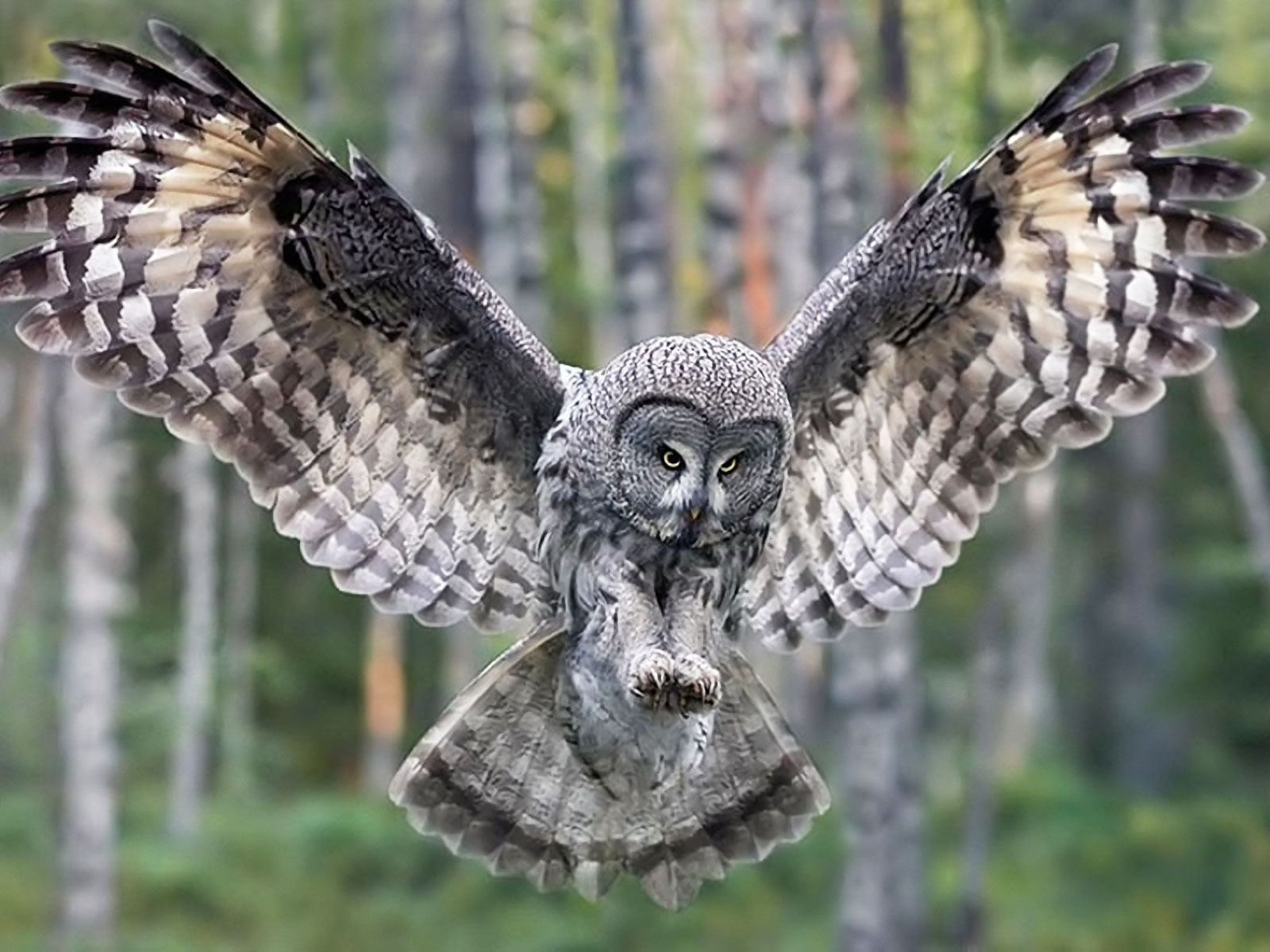
The Biggest Animals Kingdom and in The World | Owl | Owls have large forward facing eyes and ears of holes, a hawk-like beak, a smooth face, and usually a remarkable circle of feathers, a facial disc in each eye. Most birds of prey sport eyes on the sides of their heads, but the nature of the owl stereoscopic eyes face forward makes greater sense of depth perception needed for low light hunting. Owls can turn the head and neck as much as 270 degrees in either direction. Prisoners captured by owls with filoplumes felt like feathers on the beak and feet as "antennae".


The lower owl weighs only 31 grams (one ounce) and measuring approximately 13.5 cm (5 inch) is the owl Elf (Micrathene whitneyi). Around the same time small, but slightly heavier, the least known long whiskered Owlet (Xenoglaux loweryi) and Tamaulipas Pygmy Owl (Glaucidium sanchezi). The largest owl by length is the Great Grey Owl (Strix nebulosa), representing about 70 cm (28 cm) measured average and can reach a length of 84 cm (33 in). However, the heavier (and winged) are also two great horned owls, the Eurasian Eagle-Owl (Bubo bubo) and Blakiston's Fish Owl


Different kinds of owls make different sounds, this wide range of tools called owls to find friends or announcing their presence to potential competitors, and also helps ornithologists and birders in locating these birds and recognizing species. As mentioned above, the owls facial disc helps to channel the sound of prey to their ears. The plumage of owls is usually cryptic, but many species have the head and facial markings such as masks, ear tufts and brightly colored iris. Owl a generally egg white and the near-spherical in shape and vary in number from a few tens, depending on species.


Most owls are nocturnal, they hunt their prey in the dark alone. Different kinds of owls are active during twilight the twilight of dawn and dusk: an example is the Pygmy Owl (Glaucidium). A few owls are active during the day too, the examples are the Burrowing Owl (Speotyto cunicularia) and Short-eared Owl (Asio flammeus). Much of the strategy of hunting owls depends on stealth and surprise. Owls have at least two adaptations that help them in achieving stealth. Secondly, serrated edges on the front of remiges owls to silence an owl wing beats, making a flying owl for almost silent. Some fish eating owls, where silence has no evolutionary advantage, lack this adaptation.


An owl sharp beak and powerful claws allow it to kill their prey before swallowing it whole (if not too large). Some owls are also designed specifically for the fish to hunt. Most owls share an innate ability to fly almost silently and also slower compared to other birds of prey. A flight, quiet slow is not needed for day and evening feeding owls usually see an owl approaching. Jagged edges along remiges owl to bring the successes of the wing to a mechanism almost silent. This reduction unique structure of sound frequencies above 2 kHz, thereby reducing the noise spectrum covered by the hearing typical conventional attached owl. and also within their own scale audience better than the owl, the owl This optimizes the ability to fly silently to capture prey without the prey hear the owl, the first as he flies in. It also allows the owl to monitor to keep the sound their pattern of flight. The systematic placement of owls is disputed.


There are some owls 220-225 extant species, divided into two families: the typical owls (Strigidae) and barn owls (Tytonidae). The supposed "owls" Cretaceous Heptasteornis Bradycneme and are apparently not maniraptors avialan. In the early Neogene, families have been displaced by other bird orders, leaving only barn-owls and typical owls. The last time were usually a fairly common species (probably earless) owl similar to today's North American Spotted Owl or the European Tawny differences in size and ecology found in typical owls today developed only later.


Limits around the Paleogene-Neogene (about 25 million years), owls were the dominant group of owls in southern Europe and adjacent Asia at least, the distribution of fossil and modern owl lines indicates that the decline is contemporary with the evolution of the various main lines of the typical owls, for the most part seems to have occurred in Eurasia. In America, there was rather an expansion of immigrant lineages of ancestral typical owls. The supposed fossil herons "Ardea" perplexed (Middle Miocene of Sansan, France) and "Ardea" lignitum (Late Pliocene of Germany) were probably owls, the latter was apparently near the modern genus Bubo.
Find The Biggest Animals Kingdom and in The World